The Role of DevOps in Modern AI-Enabled Platforms
By Musaib - March 10, 2026 - 7 min read
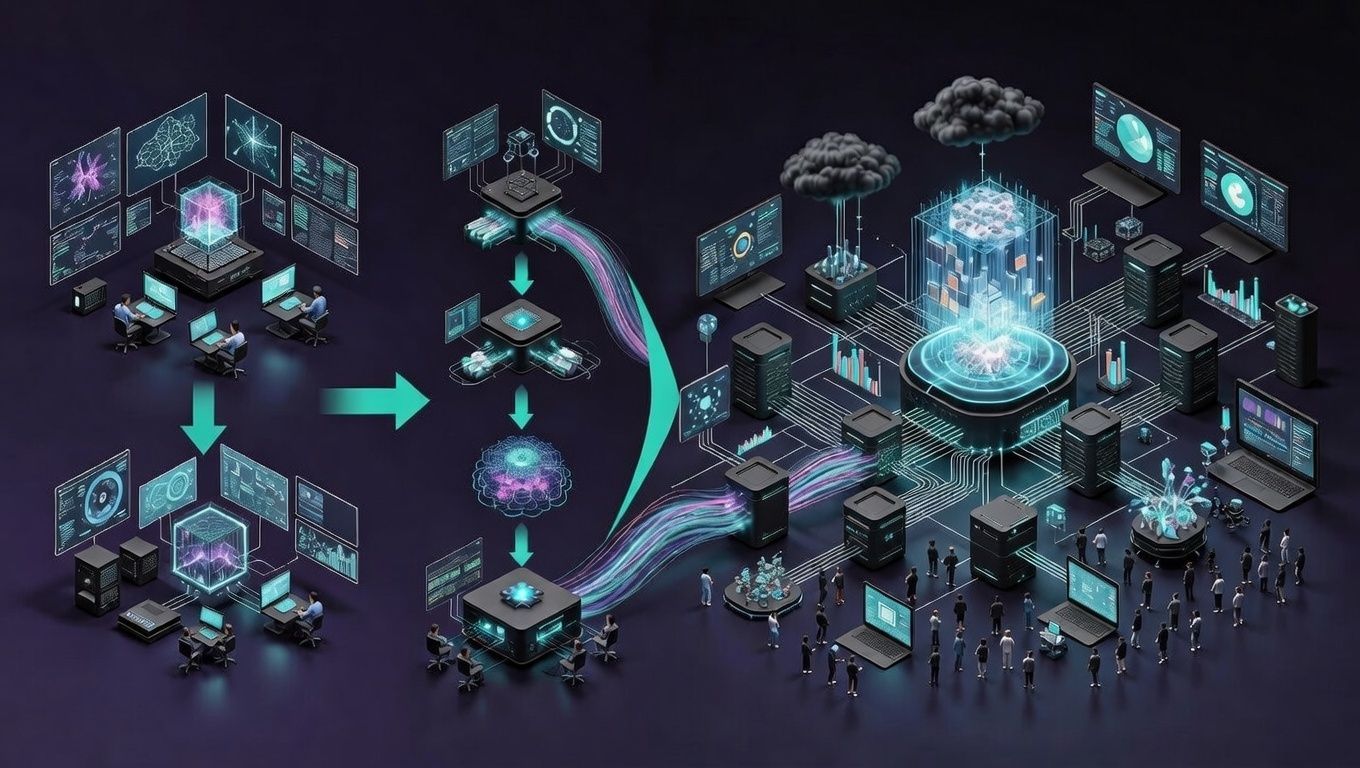
Artificial intelligence has rapidly become a foundational component of modern digital platforms. Organizations are increasingly integrating machine learning models, intelligent automation, and data-driven decision systems into their applications.
However, deploying AI models into real-world platforms is far more complex than building the models themselves.
An AI model may perform exceptionally well during experimentation, but transforming that model into a reliable production system requires an entirely different set of capabilities.
This is where DevOps plays a critical role.
DevOps provides the infrastructure, processes, and operational discipline required to transform AI models from experimental prototypes into dependable production systems.
AI Systems Are Operational Systems
Many organizations initially treat AI as a research initiative rather than an operational system.
Data scientists build models, test them against datasets, and evaluate performance metrics. While this experimentation phase is essential, it represents only the first stage of AI deployment.
In real-world platforms, AI must operate continuously within dynamic environments where:
- Data is constantly changing
- Systems experience unpredictable traffic
- Operational dependencies evolve over time
To function reliably in such environments, AI models must be integrated into a structured operational pipeline.
DevOps enables this transformation by introducing standardized processes for deployment, monitoring, and system management.
From Experimentation to Production
The transition from experimentation to production is one of the most challenging stages of AI development.
During experimentation, models are typically trained in isolated environments using curated datasets.
Production environments, however, involve:
- Live data streams
- Distributed infrastructure
- Multiple interacting services
DevOps practices help bridge this gap by establishing automated deployment pipelines that allow AI models to be consistently tested, validated, and deployed across environments.
These pipelines ensure that models behave predictably when moved from development environments into production systems.
Continuous Integration and Continuous Delivery for AI
In traditional software development, Continuous Integration and Continuous Delivery (CI/CD) pipelines automate the process of testing and deploying new code.
AI-enabled platforms require a similar approach, but with additional complexity.
Instead of only deploying application code, AI systems must also manage:
- Trained model artifacts
- Training datasets
- Configuration parameters
- Performance monitoring systems
DevOps pipelines automate these processes, allowing organizations to deploy model updates safely and efficiently.
This ensures that AI systems evolve continuously without disrupting platform stability.
Monitoring and Observability
Once deployed, AI models must be monitored just like any other critical system component.
However, AI systems introduce unique operational challenges.
Models can experience performance drift as real-world data diverges from the data used during training. Predictions may gradually become less accurate over time, even if the system itself continues to function normally.
DevOps observability practices help teams monitor:
- Prediction accuracy trends
- System latency
- Data distribution changes
- Resource utilization
These insights enable teams to detect issues early and maintain reliable system performance.
Infrastructure for Scalable AI
Modern AI-enabled platforms often require significant computational resources.
Model training, inference, and data processing can demand scalable infrastructure capable of handling large volumes of computation.
DevOps enables organizations to build flexible infrastructure environments using cloud platforms, containerization technologies, and automated orchestration tools.
These systems allow AI workloads to scale dynamically based on demand, ensuring that applications remain responsive even as usage grows.
Collaboration Across Teams
AI platforms are inherently interdisciplinary.
Successful deployments require collaboration between:
- Data scientists
- Software engineers
- Infrastructure engineers
- Operations teams
DevOps practices help align these teams by creating shared workflows and standardized operational processes.
Instead of working in isolated silos, teams collaborate through integrated pipelines and shared infrastructure systems.
This collaborative environment accelerates development while maintaining system reliability.
Final Thought
Artificial intelligence has enormous potential to transform how digital platforms operate. However, the success of AI initiatives depends not only on model performance but also on the systems that support those models.
DevOps provides the operational backbone that allows AI systems to function reliably in production environments.
By combining intelligent models with disciplined operational practices, organizations can build platforms where AI becomes an integrated and dependable component of everyday operations.
In modern technology ecosystems, the question is no longer whether AI can generate insights.
The real challenge is ensuring that those insights can operate reliably at scale.
Read More
Explore all blogs
How AI Is Changing the Cyber Threat Landscape
Author: Abdul rahim
Category: Cybersecurity, AI Security, Artificial Intelligence, Technology Leadership
Cybersecurity - 7 min read
Why Cybersecurity Must Be Embedded Into System Design
Author: Abdul rahim
Category: Cybersecurity, Software Architecture, Operational Excellence, AI Security
Cybersecurity - 6 min read
From Freelancing to AI Consulting: The New Global Opportunity
Author: Nayel
Category: Artificial Intelligence, Technical Consulting, Technology Leadership, Digital Transformation
Artificial Intelligence - 8 min read