AI Is Not a Feature , It’s an Operational Layer
By Nayel - March 10, 2026 - 7 min read

In recent years, artificial intelligence has moved from research labs into everyday business conversations. Nearly every organization today is exploring how AI can improve efficiency, automate processes, or generate insights from data.
However, many companies still approach AI the same way they approach traditional software features.
They treat it as something that can simply be added to an existing product.
A recommendation engine here.
A chatbot there.
A predictive dashboard layered on top of existing data.
This approach often produces impressive demonstrations, but rarely produces lasting operational value.
The reason is simple:
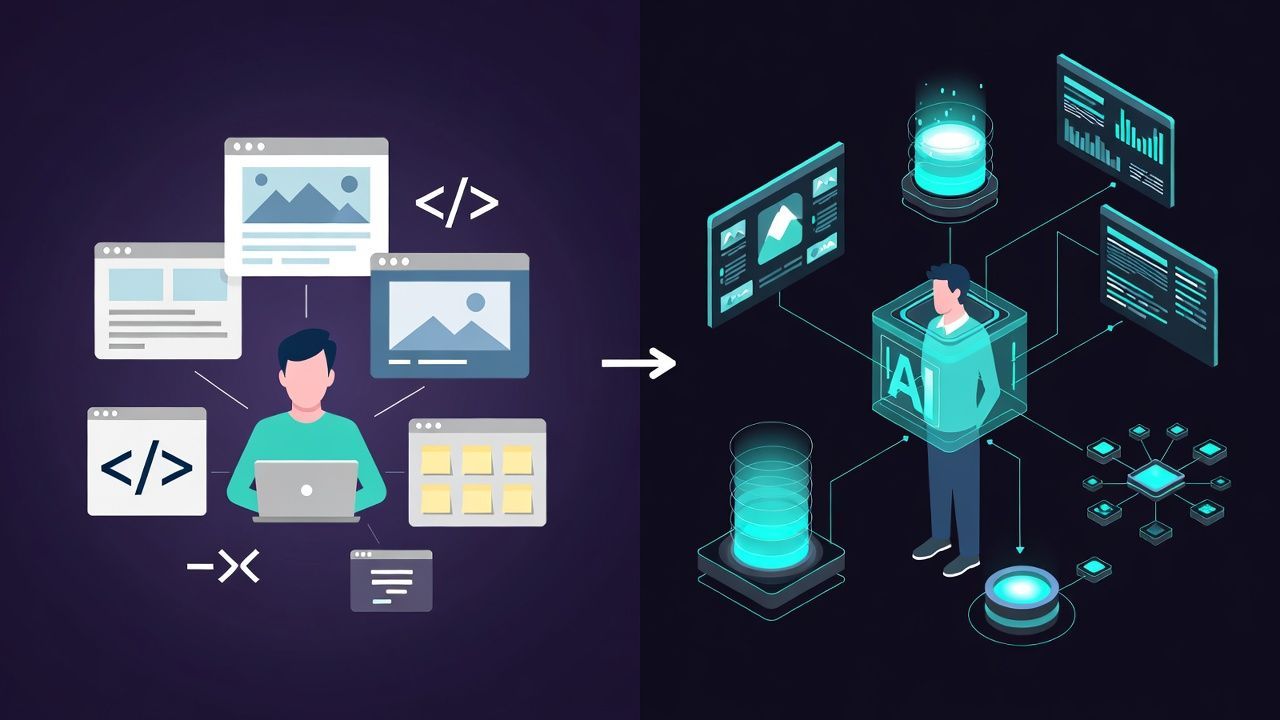
AI is not a feature. It is an operational layer.
The Difference Between AI Features and AI Systems
A feature is an isolated capability within a product.
For example:
- A search function
- A reporting dashboard
- A notification system
These features perform specific tasks but operate within a predefined structure.
AI behaves differently.
Artificial intelligence interacts with data pipelines, decision systems, workflows, and operational processes. It influences how information moves through an organization and how decisions are made.
When AI is implemented as a surface-level feature, it often fails to deliver measurable outcomes because it is disconnected from the systems that drive real operational activity.
True AI implementation requires integration across multiple layers of an organization’s technology stack.
AI Infrastructure vs AI Demonstrations
Many companies successfully build AI demonstrations.
These demonstrations showcase the capabilities of machine learning models, natural language systems, or predictive analytics tools.
But demonstrations are not infrastructure.
AI infrastructure includes the systems that allow AI to operate reliably in real-world environments. These systems manage:
- Data ingestion and validation
- Model training and monitoring
- Integration with operational workflows
- Error handling and fallback mechanisms
- Continuous improvement through feedback loops
Without this infrastructure, AI remains a prototype rather than a dependable operational component.
AI Must Be Integrated Into Decision Pipelines
The most successful AI implementations are those that become embedded in decision pipelines.
A decision pipeline is the process through which data becomes action.
Customer data → analyzed by AI → recommendation generated → action taken by a system or human operator.
When AI is integrated into these pipelines, it stops being an experimental tool and starts becoming part of the organization’s operating model.
At this stage, AI begins to create real leverage.
It reduces manual analysis, improves consistency in decision making, and allows organizations to operate at a scale that would otherwise be impossible.
Operational Readiness Determines AI Success
Before deploying AI systems, organizations must evaluate whether their operational environment can support them.
Key questions include:
- Where does the data originate?
- How reliable and structured is that data?
- Who is responsible for acting on AI outputs?
- What happens when the model produces incorrect results?
- How is the system monitored and improved over time?
If these questions remain unanswered, AI deployments often stall after the initial excitement fades.
Operational readiness is therefore just as important as model accuracy.
The Organizations That Win With AI
The organizations seeing real value from AI are not those experimenting with the most advanced models.
They are the ones building the most reliable systems around those models.
They treat AI as part of their operational architecture.
It becomes integrated with databases, workflow engines, monitoring tools, and decision frameworks.
In these environments, AI is no longer a novelty.
It becomes infrastructure.
And infrastructure compounds value over time.
Final Thought
Artificial intelligence will reshape how organizations operate, but its impact will depend on how it is implemented.
Companies that treat AI as a product feature will generate interesting experiments.
Companies that treat AI as an operational layer will build systems that transform how work gets done.
The difference between the two is not the model.
It is the architecture that surrounds it.
Read More
Explore all blogs
How AI Is Changing the Cyber Threat Landscape
Author: Abdul rahim
Category: Cybersecurity, AI Security, Artificial Intelligence, Technology Leadership
Cybersecurity - 7 min read

Operational Security: The Missing Layer in Most Organizations
Author: Abdul rahim
Category: Cybersecurity, Operational Excellence, Technology Leadership, Digital Transformation
Cybersecurity - 7 min read
From Freelancing to AI Consulting: The New Global Opportunity
Author: Nayel
Category: Artificial Intelligence, Technical Consulting, Technology Leadership, Digital Transformation
Artificial Intelligence - 8 min read